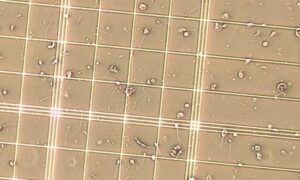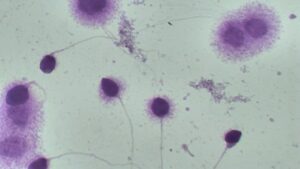
This patient attended our clinic for a Semen Analysis after having a test with the NHS, which had identified simple Teratozoospermia – abnormal sperm morphology. However, upon closer examination, our findings revealed both Oligoteratozoospermia and Globozoospermia, meaning the patient had low sperm concentration and poor morphology, with a specific structural defect affecting the acrosomal development of the sperm head.
In fact, approximately 80% of his sperm were completely missing the acrosome and therefore appeared round. Since the acrosome is essential for sperm to bind to the zona pellucida (the shell) of the human oocyte, natural conception is almost impossible. As a result, the patient will need IVF to create embryos and attempt pregnancy.
Regarding potential causes of Globozoospermia, the condition could stem from a genetic mutation of the DPY19L2 gene, which accounts for around 70% of cases. Alternatively, less commonly, mutations in SSFA2 or SPATA16 may be responsible. Therefore, identifying the underlying genetic cause is crucial for guiding counselling, treatment planning, and setting realistic expectations for fertility outcomes.
Moreover, early recognition of Globozoospermia allows patients to explore options such as ICSI (intracytoplasmic sperm injection) combined with IVF, which can improve the chances of conception. Ultimately, a combination of thorough testing, genetic evaluation, and assisted reproduction provides the most effective pathway for achieving pregnancy in such cases.